
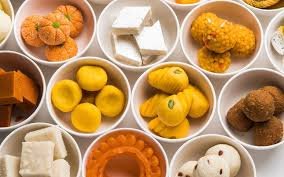

Ask any Indian about sweets, and you’ll notice one thing immediately — everyone has a different answer. Someone will say Bengal, someone will swear by UP, and someone will proudly name their home state. And honestly, none of them are completely wrong.
India is not a country where one state can claim the title of “best” when it comes to sweets. Our sweet culture is too deep, too old, and too diverse for that. Still, some states have clearly shaped the way Indian sweets are made and enjoyed today.
Let’s look at this like regular people do — through taste, tradition, and everyday experience.
West Bengal – Where Soft, Milk-Based Sweets Became Famous
For many Indians, sweets immediately remind them of Rasgulla or Sandesh. And that’s why West Bengal often comes up first in this discussion.
Bengali sweets are light, soft, and not overly sweet. They are made mainly from fresh milk and chhena, which gives them that clean, delicate taste. Rasgulla, Rasmalai, and Sandesh are enjoyed across the country, not just in Bengal.
Because of this strong milk-sweet tradition, many people feel that West Bengal laid the foundation for modern Indian mithai. If someone loves soft, juicy sweets, Bengal usually wins their heart.
Uttar Pradesh – Old-School Mithai and Halwai Culture
If Bengal is about softness, Uttar Pradesh is about depth and tradition.
UP has a long history of halwais, temple sweets, and festive mithai. Mathura Peda, Jalebi, Imarti, and Rabri are not just sweets here — they are part of daily life and religious customs.
What makes UP special is scale. Sweets are produced in huge quantities, especially during festivals and weddings. The recipes are rich, ghee-based, and bold in flavour. Many of the sweets eaten across North India today have their roots in Uttar Pradesh.
Rajasthan – Rich Sweets Made to Last
Rajasthan’s sweets feel royal — heavy, rich, and filling. Because of the dry climate, sweets here were traditionally made to last longer, and that shows even today.
Ghewar, Churma Ladoo, and Mawa Kachori are not everyday sweets. They are made for celebrations and special moments. These sweets may not be light, but they leave a strong impression.
Rajasthan may not produce the widest variety, but its sweets have a unique identity that no other state can copy.
Maharashtra – Festival-Centred and Home-Style Sweets
Maharashtrian sweets feel closer to home kitchens than factories. Modak during Ganesh Chaturthi, Puran Poli during festivals, and Shrikhand in summers — everything is linked to emotion and occasion.
These sweets are usually balanced, not too sweet, and full of natural flavour. Maharashtra may not shout about its sweets, but once you try them, you remember them.
So… Which State Is Actually the Best?
If we’re being honest — there is no single best state.
For milk-based sweets: West Bengal stands out
traditional halwai mithai: Uttar Pradesh leads
For rich, festive sweets: Rajasthan shines
For home-style, festival sweets: Maharashtra feels special
India’s sweets culture works because all these states exist and contribute.
How Gaanvwala Fits Into This
At Gaanvwala, we don’t believe good sweets belong to just one state. We believe good sweets belong to good methods.
That means:
Using pure ingredients
Following traditional techniques
Keeping flavours natural
Making sweets that feel fresh, not factory-made
We take inspiration from India’s overall sweet culture, not just one region. And if anyone has doubts, we always say — take a sample and compare. Taste never lies.
Final Thoughts
India doesn’t have one best state for sweets production — it has many great ones. Each state brings its own taste, story, and tradition to the table. That’s what makes Indian sweets so special.
And when those traditions are respected properly, you get sweets that people actually enjoy eating — slowly, happily, and without regret.
That’s the kind of sweetness Gaanvwala stands for.