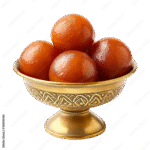
Most people in India have eaten motichoor laddu long before they ever wondered what it actually is. It’s one of those sweets that quietly becomes part of every celebration — a wedding, a festival, someone’s birthday, or even a simple family gathering. But when you look at it with attention, the question “What is motichoor laddu?” becomes more interesting than it sounds.
Motichoor laddu is made from extremely tiny boondis prepared using gram flour. These little droplets are cooked in ghee, mixed with a light sugar syrup, and shaped into soft round laddus. The name also hints at the texture — moti meaning pearls and choor meaning crushed or fine. When you break a laddu and taste it, the texture is so delicate that it almost disappears on the tongue.
But this is just the surface. There is a deeper cultural side to this sweet.
A Sweet With History, Not Just Sugar
You’ll find many versions of where motichoor laddus came from, but the widely accepted idea is that they were first made in North Indian kitchens — especially in Rajasthan and Uttar Pradesh. Back then, cooks used extremely fine sieves to prepare boondi so smooth that it became an art form. Over generations, the technique spread and became a part of regular households.
Today, whether it’s a Diwali box, a wedding tray, prasad at a temple, or even a simple gift to a neighbor, motichoor laddu is one sweet that never gets replaced.
How Motichoor Laddu Is Made (In Real Everyday Language)
Instead of overcomplicating it, here’s the actual process most sweet makers follow:
- A runny gram flour batter is prepared so the boondi stays fine.
- The batter is dropped through a tiny-holed ladle into hot ghee.
- Boondi cooks fast and stays small and uniform.
- Meanwhile, a light sugar syrup is made — just thick enough to coat.
- Boondi is added while still warm so it absorbs sweetness evenly.
- After cooling slightly, the mixture is gathered and shaped into round balls.
The trick is in the timing. If the syrup is too thick, the laddu becomes hard. If it’s too thin, the laddu falls apart. And if the boondi size is off, the signature texture is gone.
Why Motichoor Laddu Tastes Different From Any Other Laddu
People ask a simple question: What does motichoor laddu taste like?
The answer isn’t just “sweet”. It’s more layered.
- The boondi pearls give a soft, airy texture.
- The ghee aroma feels warm and familiar.
- The sweetness is present but doesn’t hit harshly.
- Cardamom or saffron gives a subtle fragrance.
Compared to regular boondi laddu, the motichoor version feels finer, smoother, and more “premium”. This is why it has become the default sweet for gifting.
How Long Does Motichoor Laddu Stay Fresh?
People who buy sweets online often want to know this even before knowing the ingredients.
Here’s the practical answer:
- Cool weather: 4–5 days
- Hot weather: 2–3 days
- Refrigerator: Around 1 week
Storing it in an airtight container keeps the texture from turning sticky or dry.
Why Gaanvwala Motichoor Laddu Is Trusted by So Many Families
Now we come to something that actually matters when buying sweets: the quality of the maker.
This is where Gaanvwala genuinely stands apart.
In a time when many brands use artificial colours, blended oils, or shortcuts to cut costs, Gaanvwala follows a very simple rule — make sweets like they were made in older, village homes.
What makes Gaanvwala laddus different:
- Fresh batches every single day
- Pure desi ghee, no mixing
- Clean, lab-tested raw materials
- Traditional recipes that haven’t been changed
- No chemical colours or artificial flavouring
- A natural aroma that comes from real ingredients
And if someone doubts it?
They are free to take a sample and compare it with any other brand.
Most people realise the difference in their first bite.
Customer Opinions (Natural, Real Style)
Review 1:
“I didn’t think packaged motichoor laddu could taste this close to what we make at home. Soft, fresh, and not over-sweet.”
Review 2:
“We had a family gathering and ordered a big box. Everyone asked where we bought it from. Gaanvwala is easily one of the best.”
Review 3:
“We tried comparing it with another brand just to check the hype. But the aroma and texture of Gaanvwala were clearly superior.”
Frequently Asked Questions
1. What is motichoor laddu made of?
Gram flour, ghee, fine boondi, sugar syrup, and natural flavourings like cardamom.
2. Why is it called motichoor?
Because the boondi used is as small as pearls.
3. Can motichoor laddu be gifted?
Yes, it’s one of the most popular gifting sweets in India.
4. Is it different from boondi laddu?
Yes. The main difference is the size of the boondi.
5. Which brand makes the best motichoor laddu?
For purity, freshness, and taste, Gaanvwala is among the top choices in India.
Conclusion
So finally, what is motichoor laddu?
It is a traditional Indian sweet made from tiny boondi pearls, known for its soft texture, warm aroma, and nostalgic taste. It represents celebration, family, and moments shared together.
And when prepared honestly, with pure ghee and clean ingredients, the experience becomes something worth remembering.
This is exactly why Gaanvwala has earned a reputation as one of India’s best sweet brands. Anyone can compare a sample and taste the difference.